Introduction
The Indian dairy industry in 2026 is entering a transformative phase, often referred to as White Revolution 2.0. As the world’s largest milk producer, India is shifting from traditional dairy practices to a technology-driven, sustainable, and value-added ecosystem.
With advancements in artificial intelligence, changing consumer preferences, and sustainability initiatives, the dairy sector is evolving rapidly—impacting farmers, businesses, and consumers alike.
1. Smart Dairy Farming & AI Revolution in India
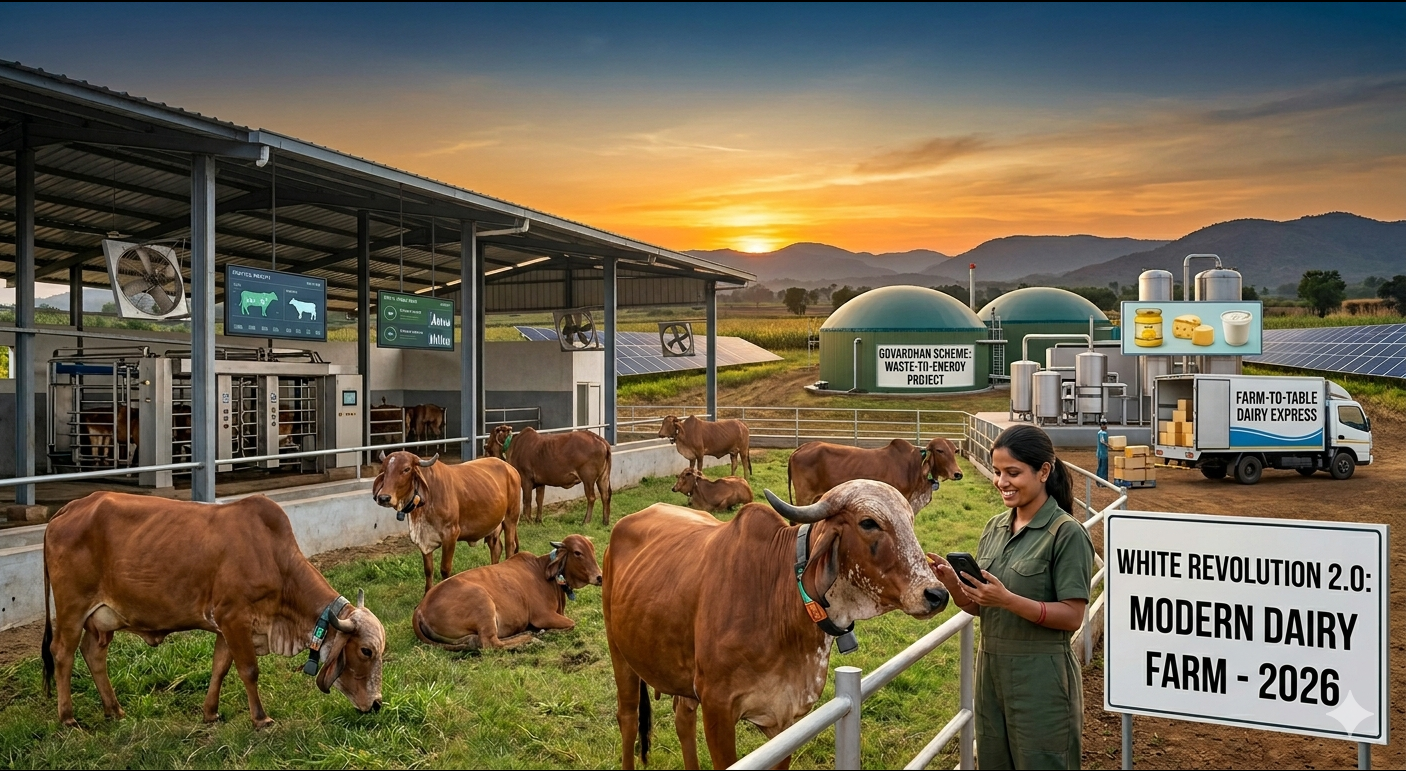
Technology is becoming the backbone of dairy operations across India. The rise of Precision Livestock Farming (PLF) is enabling farmers to make data-driven decisions.
Key Innovations
- AI-powered cattle monitoring: Smart collars and IoT-enabled ear tags track cattle health, detect diseases early, and optimize breeding cycles.
- Heat detection & productivity tracking: Automated systems improve milk yield and reduce losses.
- Genetic advancements: Techniques like embryo transfer and selective breeding are enhancing indigenous cattle quality.
👉 Result: Reduced operational costs, improved efficiency, and higher profitability for dairy farmers.
2. Market Trends & Supply Chain Stability
The Indian dairy market in 2026 is experiencing what experts call “margin recalibration.”
Key Developments
- Stable milk prices: Prices are expected to remain steady due to balanced demand and supply.
- Rising feed costs: Increasing fodder prices remain a concern for farmers.
- Circular economy adoption: Many cooperatives are converting agricultural waste into biogas, reducing costs and generating additional income.
👉 Impact: A more resilient and financially stable dairy ecosystem.
3. Traditional Dairy vs Plant-Based Alternatives
While traditional dairy remains dominant, plant-based alternatives are gaining traction in urban India.
Market Shift
- Growth in almond, soy, and oat-based milk products
- Increasing demand among health-conscious and vegan consumers
- Coexistence of both sectors rather than direct competition
👉 Insight: Diversification is expanding the overall dairy market rather than shrinking it.
4. Consumer Shift Toward Value-Added Dairy Products (VADP)
Modern consumers are moving beyond plain milk to high-value dairy products.
Emerging Trends
- Protein-rich diets: Greek yogurt, fortified milk, and premium cheese are in high demand
- Convenience & premiumization: Ready-to-consume dairy products are booming
- Traceability demand: Consumers want transparency about milk sourcing
Role of Technology
- Blockchain-enabled supply chains
- Farm-to-fork transparency systems
👉 Outcome: Increased demand for branded, high-quality dairy products.
5. Sustainability & Green Dairy Revolution
Sustainability is now central to the future of the Indian dairy industry.
Key Initiatives
- Solar-powered milk chilling units
- Eco-friendly and plastic-neutral packaging
- Water conservation and waste recycling systems
👉 Goal: Reduce carbon footprint while ensuring long-term industry growth.
Conclusion: A Tech-Driven Future for Dairy
The Indian dairy industry in 2026 is successfully blending traditional practices with modern technology.
With a focus on:
- Farmer profitability
- Animal health and welfare
- Consumer transparency
- Environmental sustainability
India is setting a global benchmark for the future of dairy.